


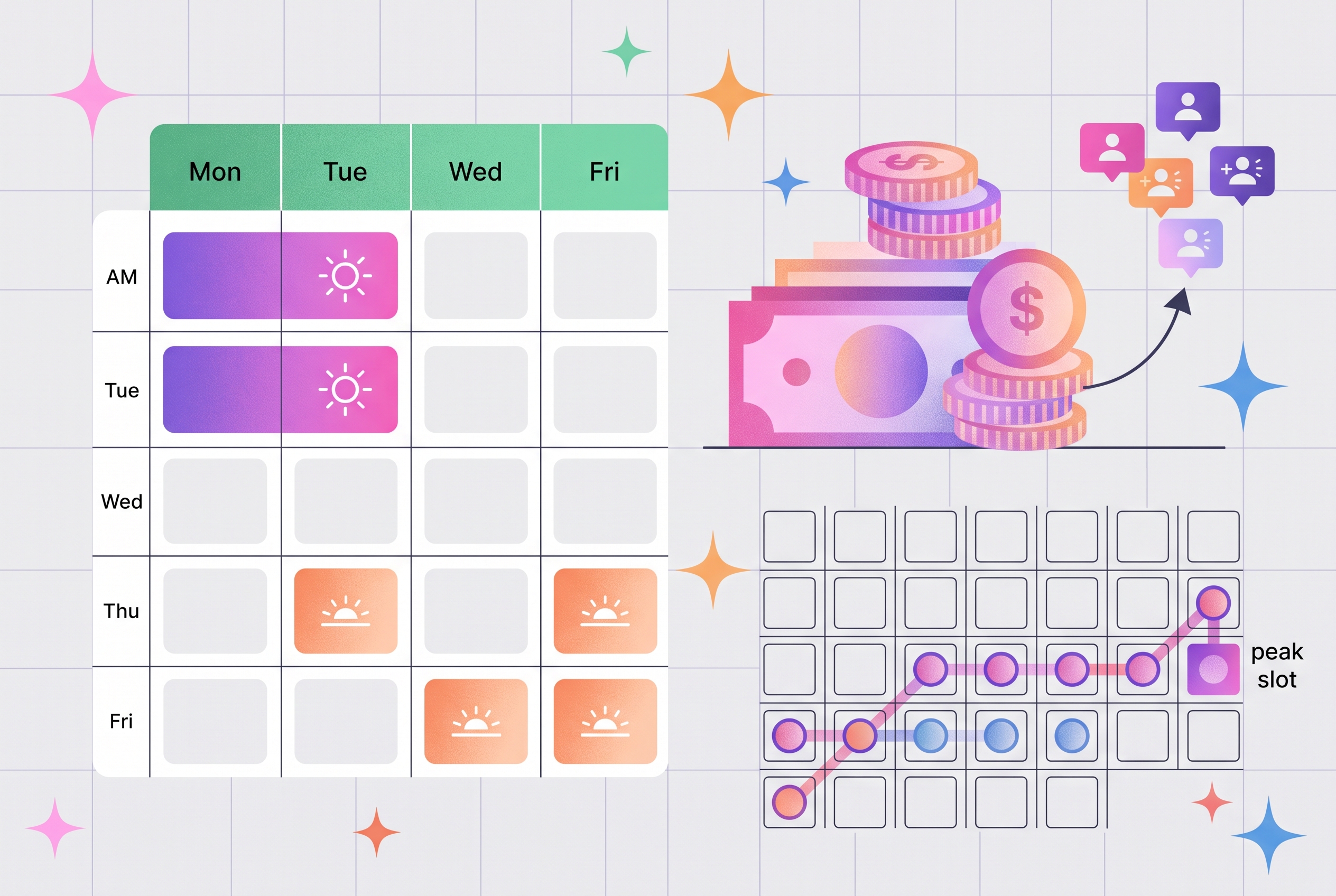

According to most industry data, the best times to schedule fitness classes are early mornings around 6am, lunchtime, weekday evenings from 5 to 7pm, and weekend mornings, with 6pm the most commonly reported peak of all. Those averages make a fine starting grid, but they describe someone else's members. This guide covers what the data says, the timing factor almost nobody talks about, and a 30-day method for finding your own peaks.
What the industry data says
Across scheduling platforms and industry write-ups, the same windows keep surfacing:
- Weekday evenings, 5 to 7pm. The most consistently reported peak, with 6pm cited most often as the single busiest slot. Monday to Wednesday evenings tend to outdraw the back half of the week.
- Early mornings, around 6am. Smaller crowds than evenings, but remarkably loyal ones. Pre-work regulars are often the most consistent attenders on the timetable.
- Lunchtime. Short express formats fill the 12 to 1pm slot in office-adjacent locations.
- Weekend mornings, 9 to 10am. The standout weekend window, and a natural home for flagship community sessions.
- Format nuances. Yoga is often reported strongest on weeknights, with Tuesday frequently cited as its best day.
Mid-afternoons and late Fridays are the commonly reported quiet zones. Treat all of this as the market average it is: a grid to start from, not a verdict on your studio.
Your audience beats the clock
Every "best time" claim hides an assumption about who is attending. Office workers make 6am, lunchtime and 6pm work. Parents fill 9:30am after school drop-off and struggle with 6pm. Retirees prefer mid-morning, the reported dead zone. Students and shift workers turn afternoons into peaks.
Your business type shifts the clock too. Booking data in the LegitFit 2025 Industry Report shows how differently each niche behaves:
- PT and small group personal training clients are early birds, booking most heavily between 5am and 9am all week.
- Pilates draws a strong mid-morning crowd (8 to 10am) on top of the post-work rush, and weekend bookings land almost entirely before 11am.
- Saunas and rehab clinics see a fairly even spread from 7am to 7pm.
- Most other gyms and studios peak after work on weekdays (4 to 8pm) and shift to weekend mornings (7 to 11am).
So before copying the industry grid, answer one question: whose week is your timetable built around? A schedule that matches your actual members' lives will beat the averages every time, and it sharpens everything else you do, from programming to marketing.
The timing nobody talks about: time of month
Time of day is only half the answer. Booking activity isn't evenly spread across the month either. The LegitFit 2025 Industry Report, based on anonymized data from thousands of fitness businesses, found that bookings peak on the 10th of the month at around 28% above baseline, with a second spike around the 25th at roughly 15% above. Both line up with common pay cycles.
The practical move is simple: time class launches, membership pushes and promotions to land around the 10th and the 25th, when members are most ready to commit.
How to find your gym's best times in 30 days
- Pull the data you already have. Export bookings and attendance by slot for the last 60 to 90 days, then rank every session by fill rate.
- Read your waitlists as votes. A recurring waitlist is demand for another session at or near that time.
- Ask, then verify. Survey members on the class they wish existed, then confirm with a test, because stated preferences and actual attendance often disagree.
- Test one slot per month. Give each experiment four weeks and judge it on fill rate, not opening-week buzz.
- Watch the seasons. January evenings and September mornings behave differently, so keep last year's data in view before pruning a summer-quiet slot.
Self-service booking keeps this loop honest. When members book themselves in rather than being pencilled into a paper register, every tap quietly records when they actually want to train, and that is the raw material for every decision above.
Protect the peaks, work the shoulders
Once you know your peaks, treat them differently:
- Protect peak slots with your best coaches and signature formats. Never run experiments in your busiest hour.
- Work the shoulder slots (the hours either side of your peaks) with express versions and overflow sessions fed by waitlists.
- Prune honestly. A slot that stays under half full for a full cycle, with a fair coach and format, is renting space in your payroll.
The full pruning method is in our guide on how to create a group fitness class schedule, and pairing it with strong retention strategies keeps the peaks full year-round.
Plan the year, not only the week
Class timing has a third dimension beyond day and month: the season. The pattern most operators recognize is a January surge, a gradual spring settle, a summer soft patch, a September rebound that behaves like a second January, and a December that belongs to community events more than volume. The data backs up that autumn rebound: in the LegitFit 2025 Industry Report, September saw the biggest month-on-month jump in bookings (15%), and October was the busiest month of the year for every business type. Four seasonal moves keep your timetable ahead of it:
- January: add capacity behind waitlists, not ahead of demand. Let full classes and waitlists prove the need, then open overflow sessions. Speculative slots for the resolution crowd leave you making awkward cuts in March.
- Summer: trim gently and change the format, not the habit. Shorter express sessions and outdoor variants hold routines together through vacation season better than cancelled slots do.
- September: relaunch like you mean it. Back-to-routine demand rewards a refreshed timetable announced in late August, when members are rebuilding their weeks anyway. September through November is your strongest stretch of the year, so staff and programme for it.
- December: swap volume for connection. Attendance dips but community peaks. Themed sessions and challenge finales carry members through to January intact.
Two rules make seasonal changes safe. First, make them visibly temporary so members keep trusting the core timetable. Second, compare each month against the same month last year rather than last month, so a normal July dip never panics you into cutting a slot that September would have refilled.
Let the software watch the clock for you
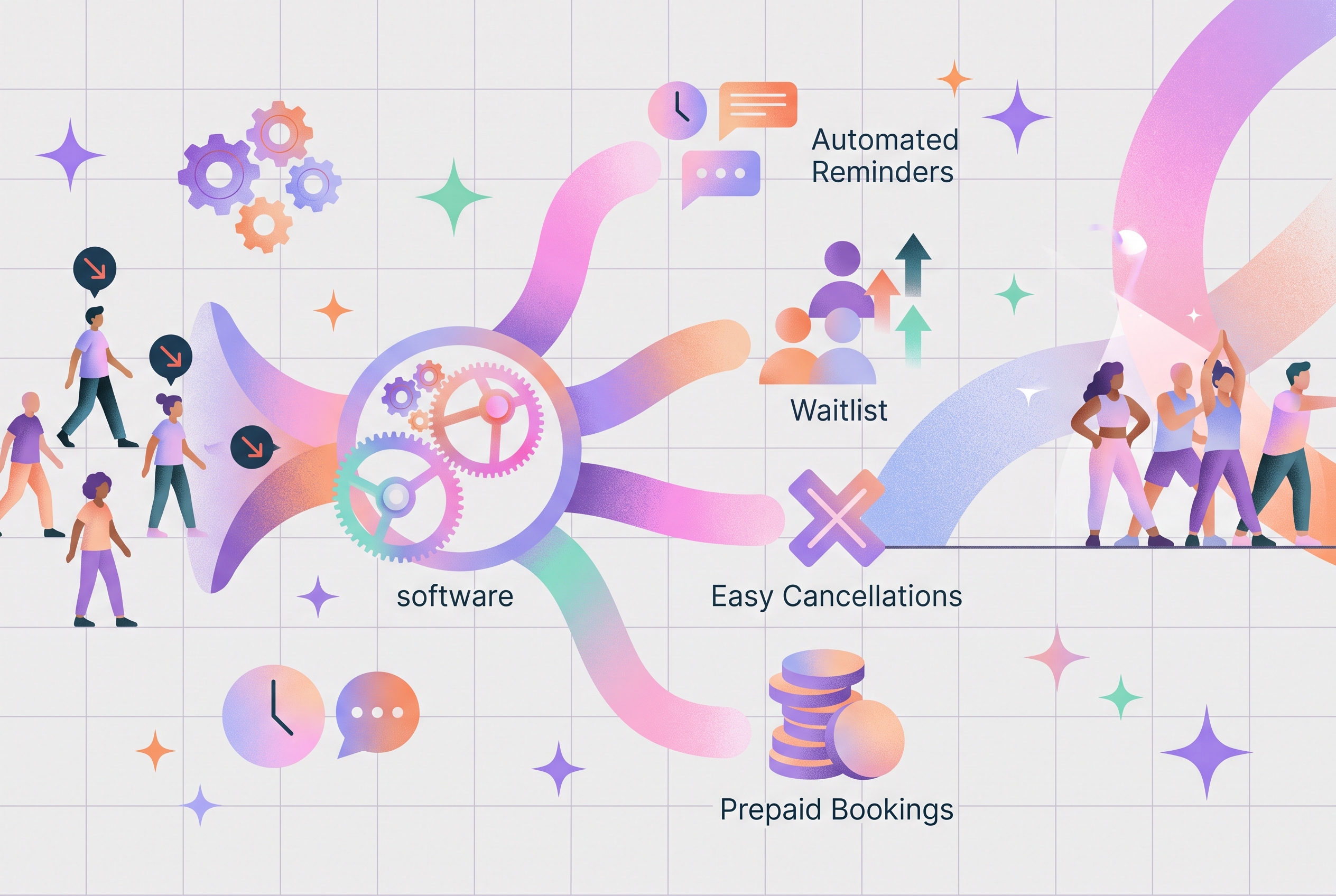
None of this requires a data analyst. A booking system that gives you capped classes, waitlists and utilization reporting in the same place your members book turns the best-times question into one that answers itself a little more clearly every week, without a spreadsheet in sight.
The best time is the one your members keep
Industry averages hand you a sensible opening grid: mornings, lunch, early evenings and Saturday at nine. Your members hand you the truth, one booking at a time. Start from the averages, watch your own data for a month, time your launches to payday, and rebuild the timetable around the slots your members prove they will protect. That's the schedule that fills classes with people who keep coming back





.jpeg)

.jpg)


Helping fitness business from day one
Trusted by fitness professionals worldwide to simplify day-to-day management and accelerate fitness business growth with clear, proven results.
Get demo & pricing